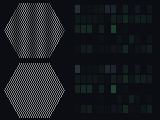
I used the response of a sending model to make the next picture for a receiving model.
PictureActivity unavailable
First cellsActivity unavailable
Deeper cellsActivity unavailable
Output cellsActivity unavailable
Picture shown · a picture we madeModel response · the model's answer
What the fly's eye sees · How the model's cells respond
Left, what the fly's eye sees. The picture is drawn on the eye's 721 facets, which is why it looks grainy. Where the picture comes from: a picture we made.
Right, how the model's cells respond. Each block is one group of cells of the same type. Brighter means responding harder. The blocks are a list, not a brain shape. What the blocks show: the model's answer.
REPLAY means you are watching a saved run. Nothing is running live now. The date is when the run was saved.
Top: sending model. Bottom: receiving model. In each row the input is left and the response is right. These are computer models, not living flies.
The picture is paused.Pause stops the saved run. Play starts it again from the same moment.
A mixed-up link changed the receiving model almost as much.
This cannot tell us what a living fly remembers or feels because it uses a computer model. The remaining ordinary explanations are listed with the measurements.
Next: Compare links with mixed-up times and matched picture strength.
EXPLORATORY · An outside reviewer checked the numbers on this card and asked for plainer wording. The result is still exploratory.
Fly One is a computer model of the parts a fly uses to see. It is not a living fly.